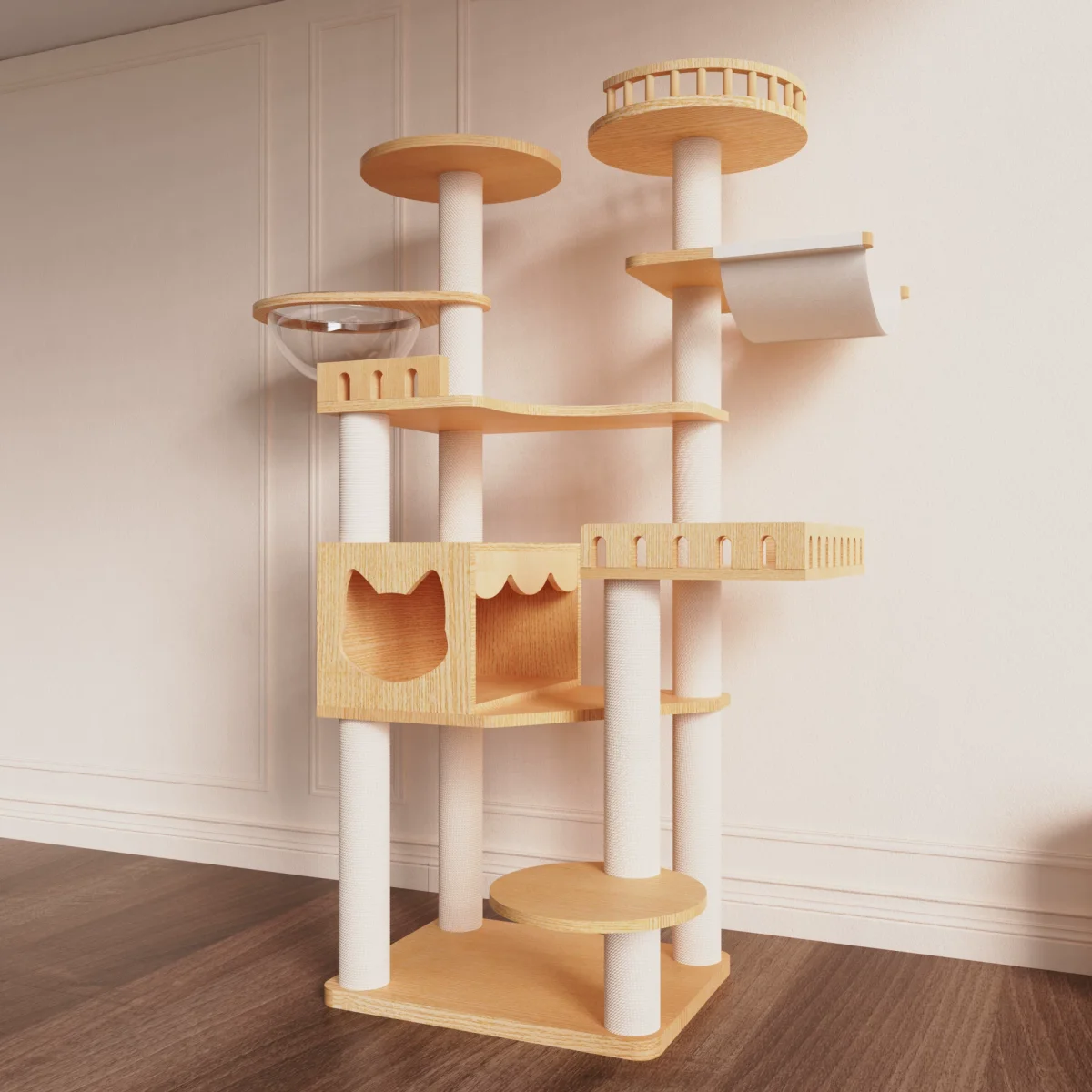
A cat tree may photograph well and still create problems for an online listing if the packed product is hard to handle, parts arrive damaged or assembly instructions leave customers guessing. For UK ecommerce buyers, the carton, the parts list and the support plan belong in the product brief from the start. This checklist shows what to request and record before approving a listing; it does not claim that a particular model has passed a shipping or safety test.
Start with an actual model and its stated packed size
The CT-0708-075 catalogue model is a useful planning example. Its supplier record lists a 160 cm assembled height, a 60 × 50 cm base, a 62 × 52 × 47 cm carton and 35 kg gross weight. These are source-record figures, not measurements of a carton received by a UK warehouse. Confirm the production sample, packed dimensions and handling requirements with the supplier and the intended carrier before setting a delivery promise or retail margin.
Review the inside of the carton, not just its outside
Ask for photographs of the packed sample before sealing and after opening. Note where the heavier boards sit, what protects exposed corners, how posts are separated from finished surfaces and whether the hardware bag can move against a panel. The packing diagram should identify the order in which parts are placed and any material used to fill gaps. A stronger outer box alone will not solve damage caused by movement inside.
- Record the carton’s measured external dimensions and gross weight.
- Identify fragile or easily marked components and their protection.
- Check whether labels remain readable after normal warehouse handling.
- Agree how damaged cartons and missing parts will be photographed and reported.
Build the sample using only customer-facing instructions
Have someone unfamiliar with the model assemble it from the proposed instruction sheet. Count the hardware and compare it with the printed list. Similar-looking posts and boards should carry unambiguous identifiers; orientation should be clear in the drawings. Record where the assembler pauses, uses force or needs an extra tool. Those observations can improve instructions before an ecommerce listing promises an easy build.
Make replacement parts identifiable
Buyers should ask which posts, textiles, bowls, platforms and fittings can be ordered separately. Record part codes and images rather than relying on descriptions such as “the upper screw”. Decide who will respond if a customer reports a missing fastener, a marked panel or an incorrectly packed component. The service promise on a listing must match the replacement route actually agreed with the supplier; no general spare-parts availability should be implied without confirmation.
Use one packed-sample approval record
A workable sign-off file contains the model and revision, assembled dimensions, measured carton, parts inventory, packing photographs, instruction version, artwork, barcode placement and unresolved issues. It should distinguish supplier-stated values from measurements made on the approved sample. If a fabric, post or board changes later, repeat the relevant checks and update the listing rather than assuming the old carton and images still describe the new version.
Put the right questions in the RFQ
For a comparable quotation, specify the destination, approximate units per SKU, proposed fulfilment route, expected packaging format, instruction language, branding needs and spare-parts expectations. Ask suppliers to quote against the same packed-product brief. This makes product cost, logistics and after-sales responsibilities easier to compare without treating an attractive product photo as evidence of delivery readiness.